Pepe nella storia
Che cosa mai sarebbe la vita senza di esso?! È la domanda che si porrebbe qualunque gourmet al mondo se solo gli balenasse il timore che per qualche ignota o maligna ragione tale prodotto dovesse venir meno.
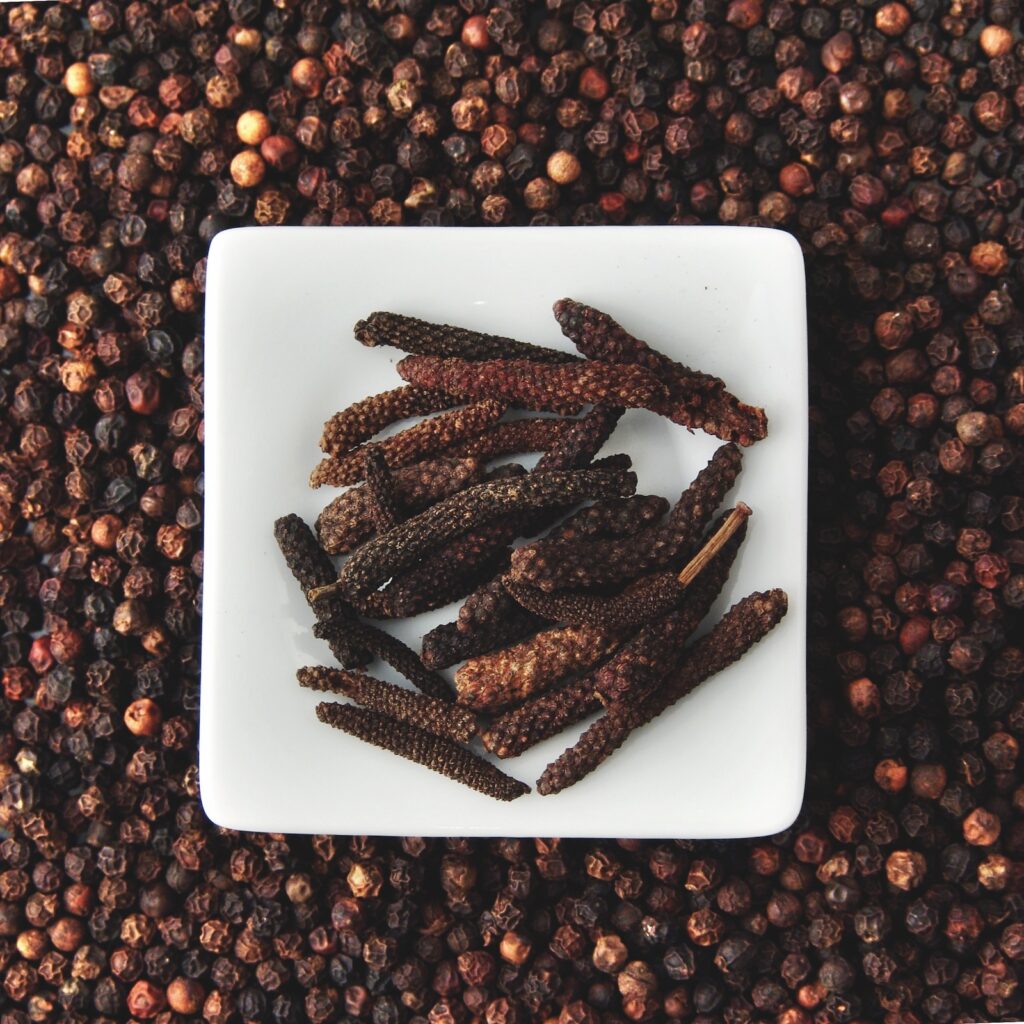
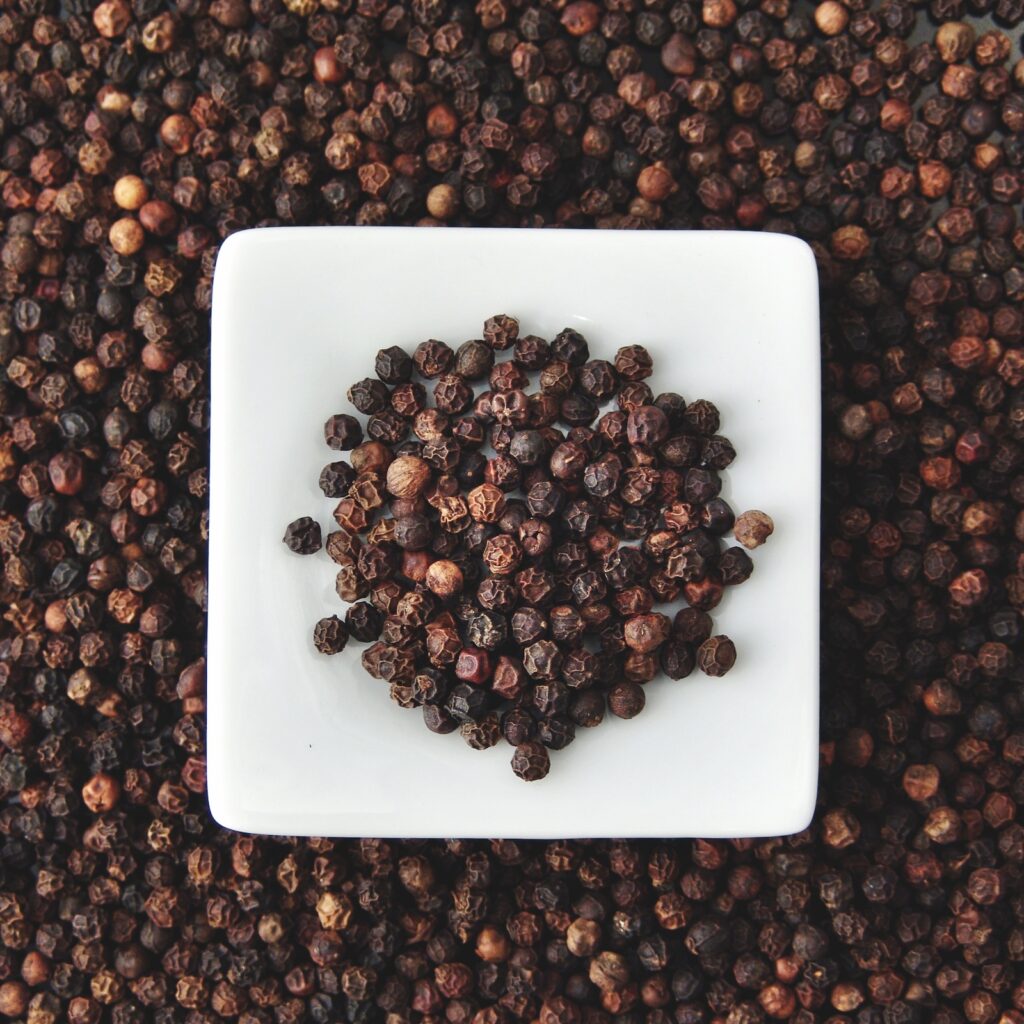
In verità il pepe, pur non essenziale per la vita dell’uomo come il collega sale (ma altrettanto chiamato oro, in questo caso nero), fu ed è al pari di quest’ultimo talmente richiesto e apprezzato da essere diventato un must per tutti i popoli del mondo. E quel piper nigrum che la leggenda vuole fosse portato in Occidente da Alessandro Magno nel IV secolo a.C., ma che in realtà era già conosciuto da oltre 2000 anni in tutta l’area del Mediterraneo, dove incontrò subito un successo che fino ad oggi non si è mai offuscato. È sempre Plinio il Vecchio che nella sua Naturalis Historia (XIV, 28) ne parla a lungo e lamenta, da quell’ottimo cronista dell’epoca che è (siamo nel I secolo d.C.), come nei mercati romani il “pepe lungo” (piper longum), cugino concorrente del piper nigrum, ma di altra famiglia, fosse più costoso di quest’ultimo.
Nel re coquinaria di Marco Gaio Apicio, gastronomo, scrittore e gaudente dell’età di Tiberio (ma taluni credono che sotto questo nome si celino due diversi scrittori, vissuti in secoli diversi), il pepe è presente in moltissime ricette; fra le molte, nei budini di formaggio, nei paté di fegato, nelle terrine a base di pesce. I Romani spendevano una vera fortuna per questa spezia, che era l’ingrediente preferito nella più esclusiva cucina dell’epoca, come scrive Edward Gibbon in The Decline and Fall of the Roman Empire.
Il pepe proveniva sempre dall’India, dove si arrivava sia via terra (un lungo viaggio!) o con altrettanto complesse spedizione di decine di navi. molte delle quali si perdevano o naufragavano lungo la rotta. Questi complessi commerci fanno ben capire come il prodotto fosse altamente apprezzato e ricercato. In più, si era diffusa la credenza che avesse virtù afrodisiache, al punto che Ovidio (Ars Amatoria 2, 417) ne suggeriva l’uso, mischiato con ortica, a chi fosse sessualmente debilitato. Non mancava altro perché la sua fama e il suo conseguente valore fossero sempre in crescita.
Si racconta che Alarico, re dei Visigoti, per rinunciare ad entrare in Roma assediata, chiedesse ben tremila libbre di pepe assieme a cinquemila libbre d’oro (e altre “bazzecole” preziose). Alla fine del Medioevo il pepe diventò anche valore di scambio nei mercati finanziari e addirittura moneta. Così Venezia, la Serenissima, che era riuscita a conquistarne il commercio, oltre a quello delle spezie in generale, grazie alle sue ottime vie di comunicazioni marittime, aumentò grandemente in potenza e in fortuna. Anche la Repubblica di Genova si dedicò con successo al commercio di questo prezioso ingrediente, sul quale vari Stati continuavano a cercare la supremazia. Alla fine del XV secolo anche i Portoghesi – che con i loro esploratori, circumnavigando il Capo di Buona Speranza, aprirono la “rotta delle spezie” – ebbero un periodo di grande fortuna, mentre cominciarono a comparire opere mediche, che continueranno nei secoli, dove si confermavano i valori del pepe come un “agitatore” del sangue e pertanto in grado di sviluppare un’influenza sugli organi genitali (insomma, il Viagra d’epoca…).
La ricerca del pepe sulle tavole europee non conobbe mai periodi di sosta o di magra; al contrario i vari Paesi si affannarono ad approvvigionarsene, seguendo la rotta delle indie. In particolare questa via nell’Ottocento fu percorsa in lungo e in largo dagli Inglesi, con i loro bellissimi clipper, che trasportavano, oltre al pepe e alle spezie in genere, il preziosissimo té. Ancor oggi i Paesi produttori sono asiatici, l’India, la Malesia, l’Indonesia, lo Sri Lanka, la Thailandia e il Vietnam, che oggi domina il mercato mondiale.
Tuttavia dall’Ottocento, con l’aumento delle comunicazioni e quindi della facilità di importazione, il prezzo del pepe incominciò a declinare rapidamente e la magica polvere nera (o bianca) potè così comparire su tutte le tavole. Dove continua ad essere apprezzata.
Pepper in history
What would life be like without it? This is the question that any gourmet would put to the world in the fear that for some unknown or unfortunate reason this product should go missing. In fact pepper, even though not essential to the life of man like its colleague salt (though also called gold, in this case black), was and is like salt, so sought after and appreciated to become a “must” all over the world.
Legend has it that piper nigrum was brought to the West by Alexander the Great in the /Vth century B.C., but in truth it was already known for more than 2000 years in all the Mediterranean area, where it immediately met with the success which has not diminished to this day. Pliny the Elder described this too at length in his Historia Naturalis (X/V, 28) and complained, excellent reporter of his times as he was (in the ist century A.D.), that, in Roman markets, “long pepper” (piper longum), a competing cousin of Piper nigrum, but from a different family, was more expensive than the latter.
In De re coquinaria by Marco Gaio Apicio, gastronomer, writer and pleasure-seeker from the age of Tiberius (but some believe that two different writers used this name in different centuries), pepper is present in many recipes including cheese pudding, liver paté and fish-based terrines. Romans spent a veritable fortune on this spice, which was the favourite ingredient in the most exclusive kitchen of the time, as Gibbon wrote in The Decline and Fall of the Roman Empire.
Pepper always came from India, where it arrived both by land (a long journey!) or by equally complex “expeditions” of hundreds of ships, many of which were lost or shipwrecked during the trip. These complex means of trading show how much the product was highly appreciated and sought after. Moreover, rumour spread that it had aphrodisiac powers, to the point that Ovid (“Ars Amatoria” 2, 417) suggested mixing it with nettles for the sexually debilitated. This was enough to make its fame and consequent value grow constantly.
It is said that Alaric, king of the Visigoths, asked for three thousand pounds of pepper together with five thousand pounds of gold (and other precious “trifles”) to relinquish his attempt to enter the besieged Rome. At the close of the Middle Ages pepper became a product of exchange in financial markets and even replaced coins. Thus Venice, the Serenissima, which had managed to conquer its commerce, as well as spices in general, thanks to its excellent maritime communications, gradually increased in power and fortune. Also the Genoese Republic successfully devoted itself to the commerce of this precious ingredient, for which various states continued to compete for supremacy. At the end of the XVth century even the Portuguese – who had opened the “spice route” with their explorers rounding the Cape of Good Hope – experienced their period of good luck. Medical treatises began to appear, to continue over the centuries, confirming the value of pepper as an “agitator” of blood and thus able to exercise an influence over the genital organs (in short the Viagra of the time…).
The search for pepper for European tables knew no respite, on the contrary various countries vied to provide it, following the Indies route. This route in particular was run by the English in the 1800s with their beautiful clippers, transporting extremely precious tea as well as spices. Still today the producing countries are Asian: India; Malaysia; Indonesia; Sri Lanka; Thailand and Vietnam, which now dominates the world market.
However, from 1800, with the increase of communications and thus the facility of importation, the price of pepper began to decline rapidly and the magic black (or white) powder could thus appear on every table from where it continues to be highly appreciated.