Libro “Salt and Pepper Shakers”
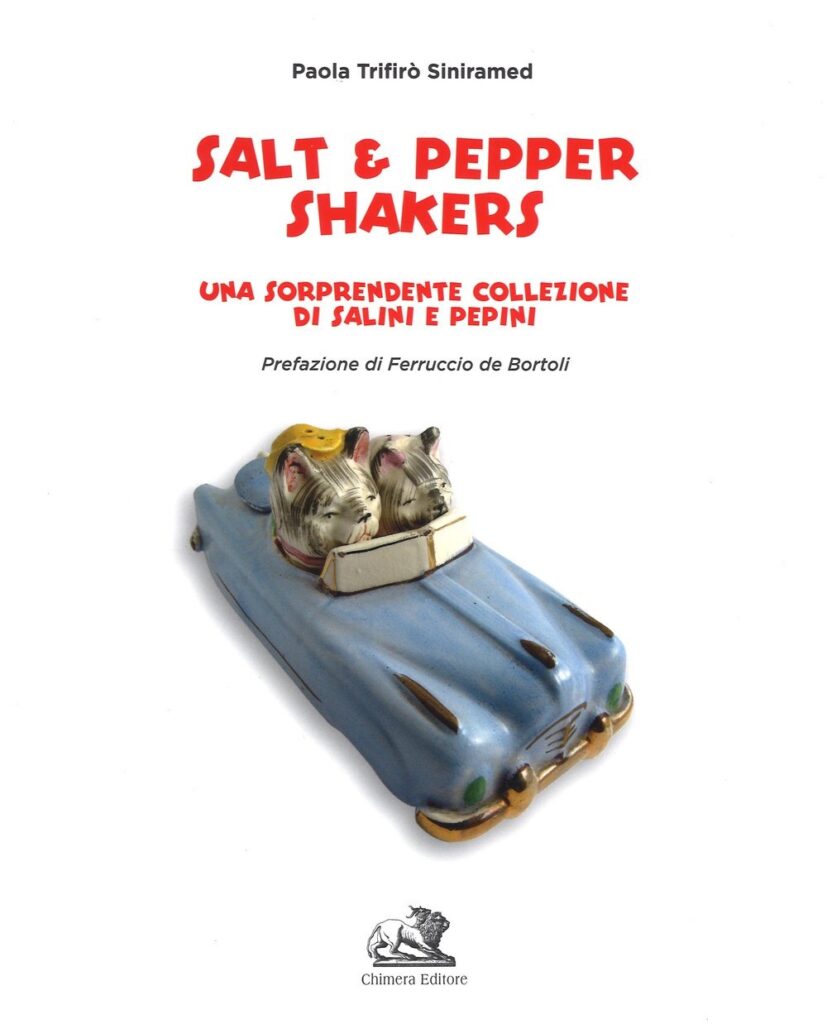
Dimentichiamo le classiche saliere italiane piuttosto che francesi o inglesi, di argento o di vermeil. C’è un altro universo tutto da scoprire. Fin dall’inizio del secolo scorso, infatti, gli USA, seguiti nel tempo da altri Paesi, unendo utilità e divertimento, scopi pubblicitari e fantasia, hanno creato un intero mondo di salini e pepini (salt and pepper shakers), nelle forme più varie e tuttavia ispirate alla realtà del vivere: dai cuochi ai giocatori di baseball, dai canguri ai clown, dagli angeli alle barche e agli strumenti musicali. Basta che siano due, uno sale, uno pepe.
A whole world is waiting to be discovered beyond traditional silver or silver gilt Italian, French or English salt cellars. Essentially, since the beginning of the last century, the USA has created a microcosm of salt and pepper shakers, gradually followed by other countries, combining utility with fun, publicity and fantasy. They appear in every imaginable shape, although inspired by real life: cooks, baseball players, kangaroos, clowns, angels, boats and musical instruments, to name but a few. Naturally they have to be in pairs, one salt, the other pepper.
SALT & PEPPER SHAKERS di Paola Trifirò Siniramed, Chimera Editore, 2015. Prefazione di Ferruccio de Bortoli

Prefazione
La prefazione di questa singolare e sorprendente collezione è opera (modesta) di un intruso. Lo perdonerete. Volendo parafrasare un detto popolare, chi scrive non è né sale né pepe. E solo un amico e un estimatore dell’autrice, nonché un commensale felice e fortunato alla sua tavola.
Paola Trifirò coltiva una passione religiosa per la cucina, nel senso che ne conosce tutte le liturgie. Officia e innova. Sa che ogni pietanza (l’etimologia è istruttiva, la radice è pietas ma indica qualcosa di straordinario) si trasforma in un gesto d’amore verso il prossimo, ancora più forte e sentito, se è cucinata alla perfezione, presentata bene, con un tocco personale di fantasia. Paola non ama le mezze misure, ricerca il massimo. Un’ostinata perfezionista. Non si accontenta di un risultato accettabile, insegue il massimo traguardo possibile. E il suo carattere, la sua filosofia di vita. Propensioni che emergono impetuose anche da questa collezione, all’apparenza di secondaria importanza. Dopotutto spargisale e spargipepe sono elementi trascurabili di una tavola. Essenziali, certo, ma quasi sempre non ce ne curiamo affatto (non accadrà più dopo aver letto e ammirato questo libro).
Ogni coppia è una storia. Piccola. Un racconto di vita quotidiana, la cartolina di un viaggio. Un divertissement minore. L’intera collezione compone una sorta di baedeker dei gusti e delle tradizioni. Il valore sta soprattutto nell’insieme, non tanto nei pezzi singoli, per quanto rari e stravaganti.
Ma questi “salini” o “pepini” non hanno nulla da invidiare ai piatti di Sèvres, agli argenti inglesi Sheffield, alle porcellane Rosenthal. Accanto a loro non sfigurano. Anzi.
Un mondo di sublime artigianalità, sorprendentemente creativo, si apre in questa collezione che attraversa i continenti, le culture, le tradizioni e le unisce tutte d’incanto. Il linguaggio della tavola è universale.
E non è mai stato così praticato. Persino in eccesso. Il sale e il pepe sono le desinenze che formano ogni lessico della cucina. Danno sapore, profondità e consistenza a ogni cibo. E dunque valore. Il sale nell’antichità era anche una misura della ricchezza, un mezzo di scambio, di pagamento. La parola salario ha quell’origine. Il sale era l’oro bianco.
Ho pensato a Paola entrando nella sala che espone la Gioconda al Louvre. Il capolavoro di Leonardo è di fronte – nascosto dal muro multietnico dei visitatori intenti a farsi selfie anziché ammirare le opere – alla immensa tela del Veronese che raffigura le nozze di Cana. E io mi sono messo istintivamente a cercare i “salini” dell’epoca. Credo che nessuno sia mai entrato in quella sala con il mio intento e la mia curiosità. E un effetto secondario della passione di Paola. In questi infiniti, divertenti dettagli della tavola, sono celati i percorsi delle diverse civiltà, che per il sale e le spezie hanno conosciuto guerre lunghe e sanguinose ma hanno trovato anche – persino attorno al desco più umile e povero – le ragioni intime di una fratellanza universale.
Preface
The preface to this remarkable and surprising collection is the (modest) work of an outsider. I am sure you will forgive me. To paraphrase an Italian folk saying, the writer is neither salt nor pepper (is rather insipid). He is just a friend who admires the author, as well as a fortunate table companion.
Paola Trifirò has a religious passion for cooking, in that she knows all the liturgies. She officiates and innovates. She knows that every dish (pietanza in Italian, from pietas indicating something extraordinary) is transformed into a loving gesture towards a fellow creature, felt even more strongly if cooked to perfection and presented beautifully, with a personal inspirational touch. Paola doesn’t like half measures, she seeks the utmost, an obstinate perfectionist. She is never satisfied with an acceptable result, she wants the best possible. This is her character, her philosophy of life, qualities which emerge forcefully from this collection too, only apparently of secondary importance. After all salt and pepper shakers are minor elements on a table. Essential, of course, but we almost never pay any attention to them (that won’t happen again after having read and enjoyed this book).
Each pair has a story to tell, a brief one, a tale of everyday life, a memento of a journey, a minor divertissement. The whole collection comprises a sort of baedeker of tastes and traditions. Its value lies in the ensemble, not so much in the single pieces, however rare or extravagant.
These salt and pepper shakers are in no way inferior to Sèvres plates, Sheffield silver or Rosenthal porcelain, nor do they cut a poor figure beside them, on the contrary.
This collection reveals a world of sublime craftsmanship, surprisingly creative, crossing continents, cultures, traditions and magically uniting them all. Table language is universal and has never been put into practice so well, even to extremes.
Salt and pepper complete the lexicon of every kitchen. They give taste, depth and consistence to food, and therefore value. Salt in antiquity was also a measure of wealth, a means of exchange, of payment, hence the origin of the word ‘salary’. Salt was white gold.
I thought of Paola as / went into the room where the Mona Lisa is exhibited in the Louvre. Leonardo’s masterpiece is directly in front of the huge canvas by Veronese depicting the Wedding Feast at Cana, though hidden by a multi-ethnic wall of visitors busily taking selfies instead of admiring the paintings. I instinctively began to look for the “salt cellars” of the time. I doubt if anyone had ever entered that room with my intention or my curiosity, this is a secondary effect of Paola’s passion. The infinite, entertaining details of the table conceal the journeys of different cultures, who ventured into long and bloody wars for salt and spices but also found – even around the most humble and poor dining table – the intimate reasons for a universal brotherhood.