Clowns
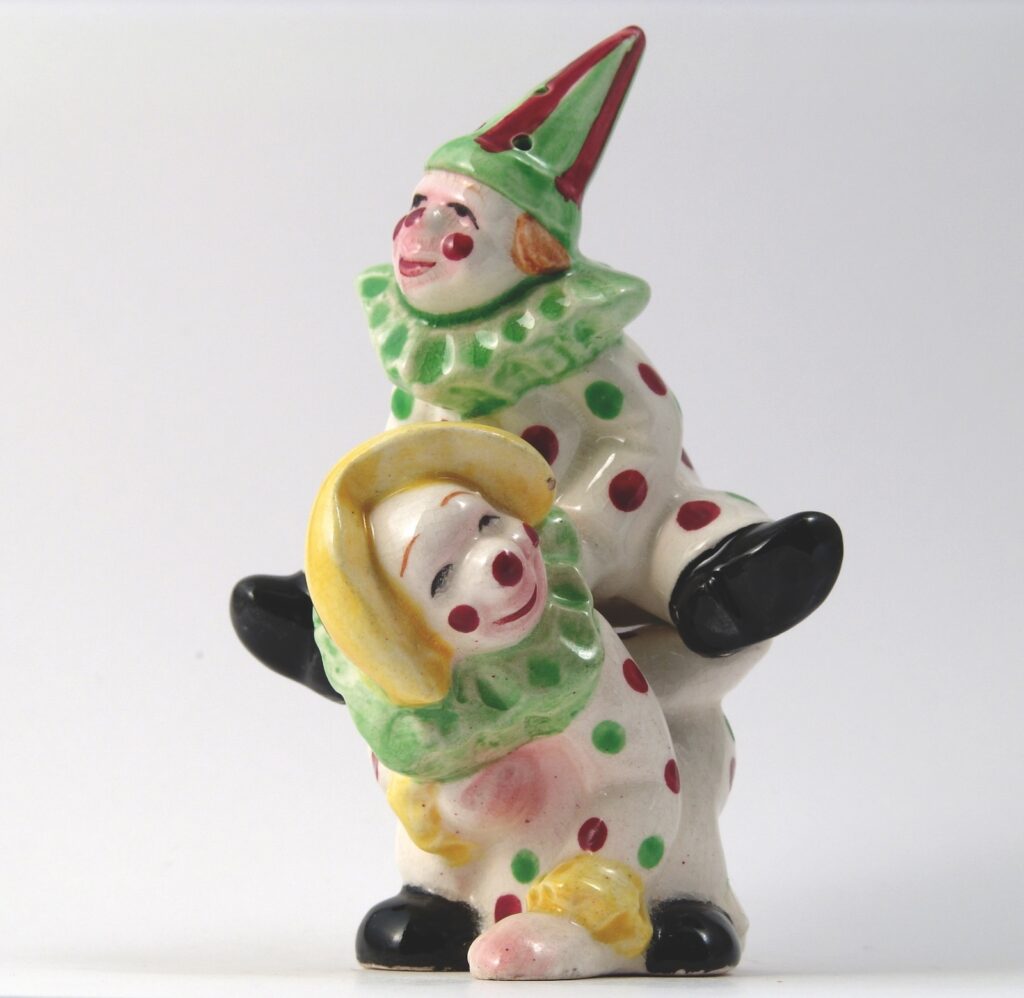
Il capitolo è aperto da due bellissimi clowns nested che giocano alla cavallina, ceramica, made in Japan, anni ’40-’50. The chapter begins with a beautiful couple of nested clowns playing leapfrog, ceramic, made in Japan between the 1940s and ’50s.
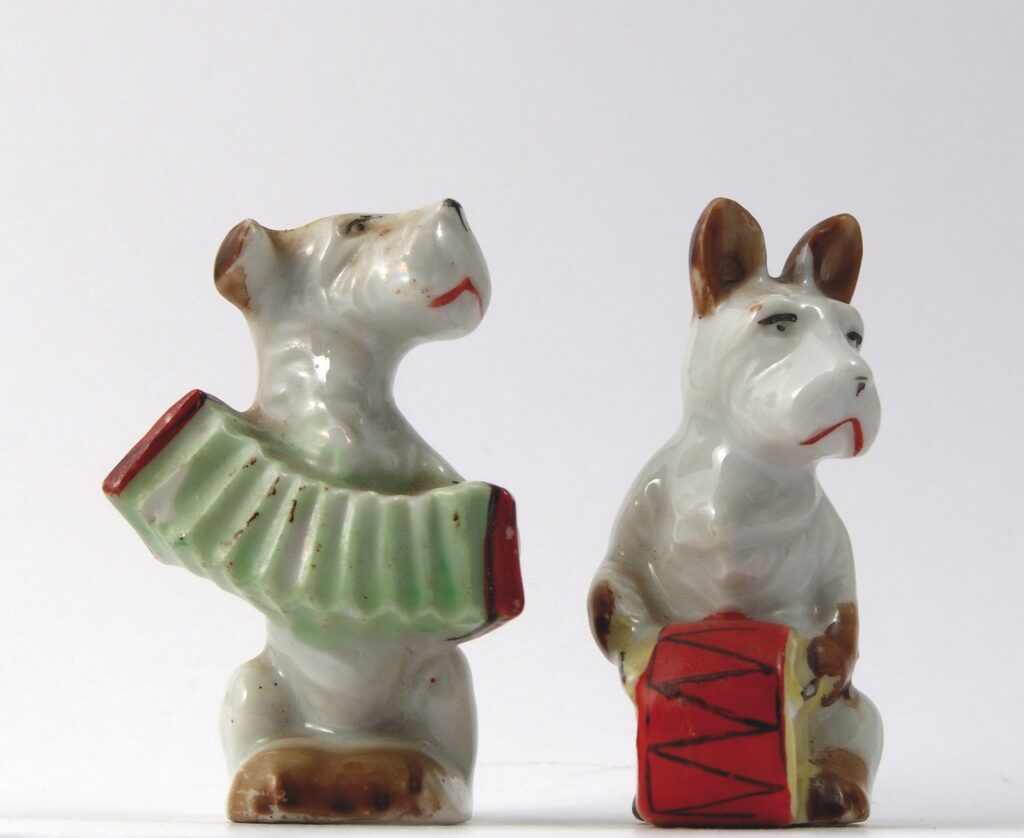
Deliziosi e divertenti gli animali musicisti, tutti ceramica made in Japan. i cagnolini con fisarmonica e tamburo. The animal musicians are delightful and amusing, all in ceramic made in Japan: the little puppies with accordion and drum.
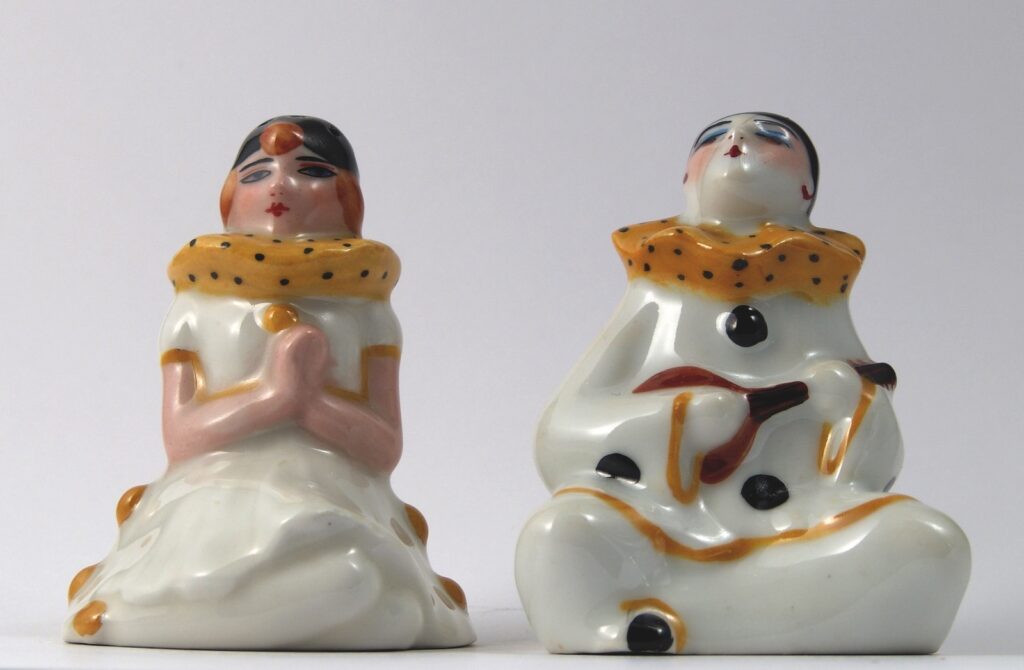
Non mancano più tradizionali Pierrot di porcellana. la raffinatissima coppia con costume giallo di manifattura francese. There are of course more traditional Pierrots in porcelain: a blue one, made in Japan and a very refined couple in yellow costumes, of French production.
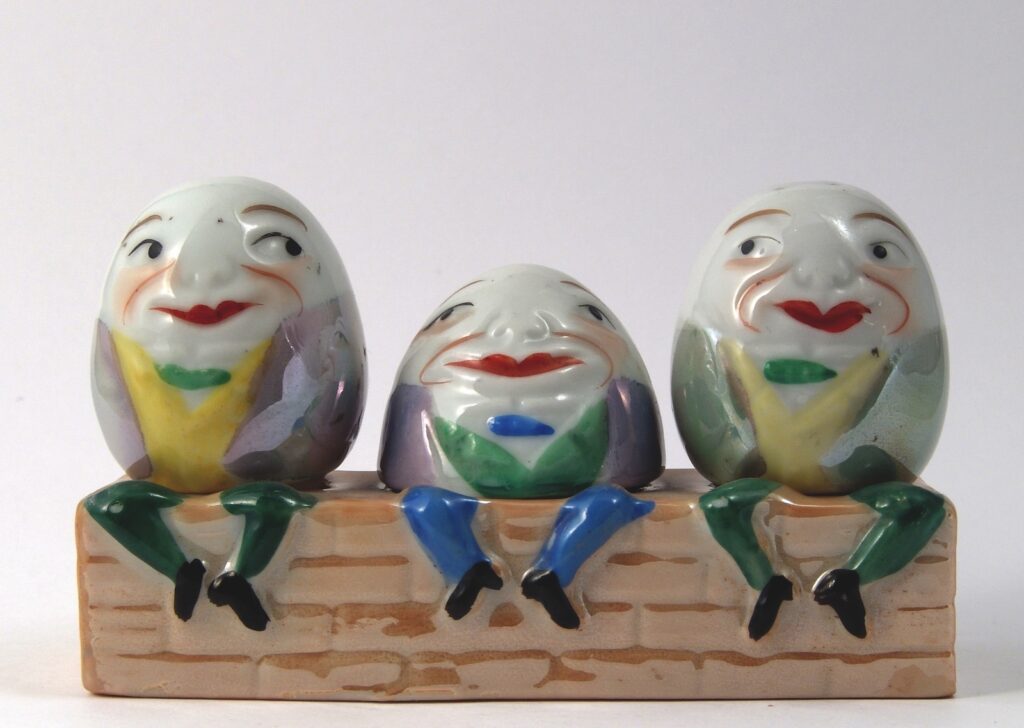
Proseguendo si incontrano pagliacci e circensi di ogni sorta: i tre Humpty Dumpty, ceramica, vintage, marchiati “foreign”: secondo la tradizione, Humpty Dumpty, personaggio di una nota filastrocca, sarebbe in realtà il Re Riccardo III d’Inghilterra, che era probabilmente gobbo e che veniva chiamato “humpbacked king”. Further on are clowns and circus characters of every kind: then three vintage ceramic Humpty Dumpties, branded foreign according to tradition, Humpty Dumpty. A character from a famous nursery rhyme, was probably in truth King Richard III of England, known as the “humpbacked king”.
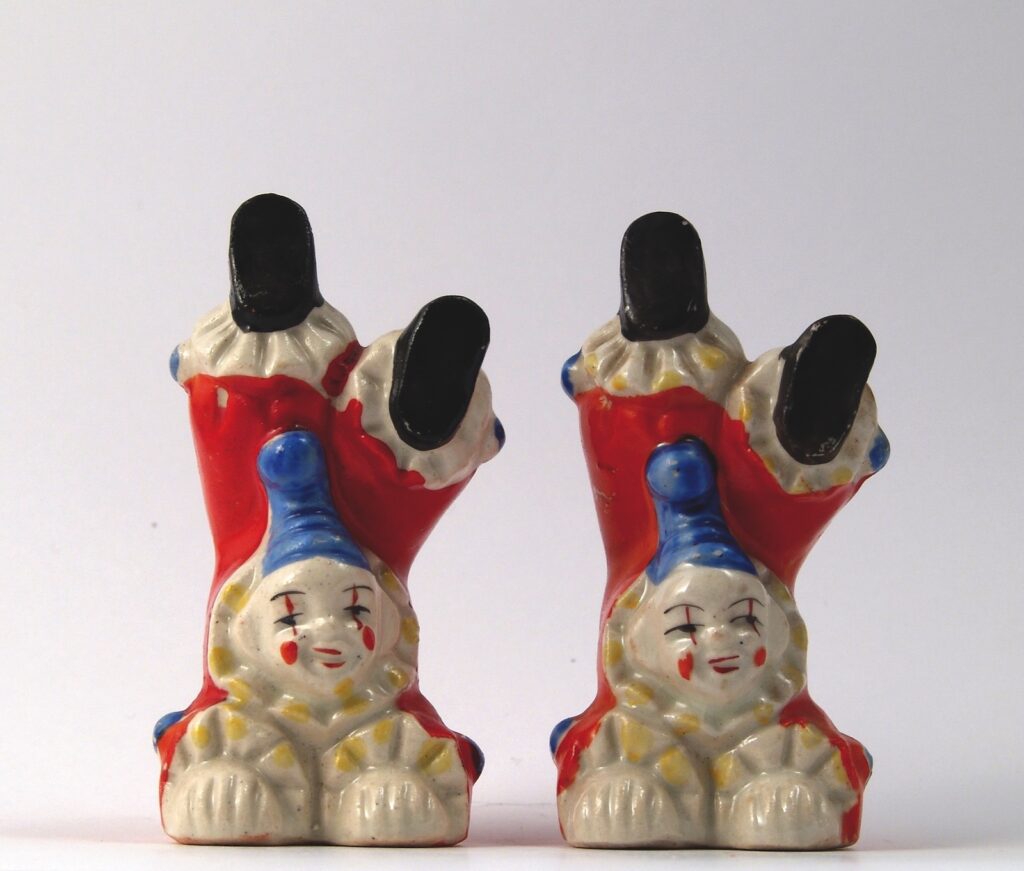
I due clowns in costume arancione che fanno la verticale. Two clowns in orange costumes doing handstands.
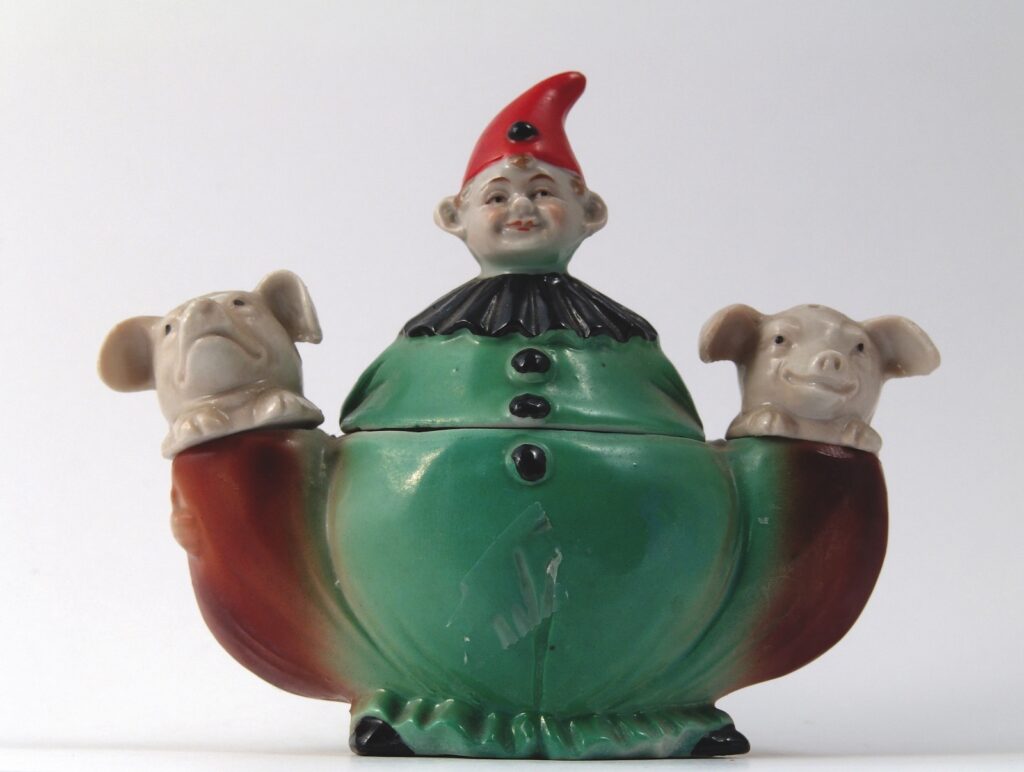
Interessante la coppia di pezzi con senapiera al centro: in uno, di ceramica, il pagliaccio è affiancato da maialini, uno sale e l’altro pepe. Lastly, an interesting couple of pieces with a mustard pot in the middle: the ceramic one has a clown with piglets, one salt other pepper.